
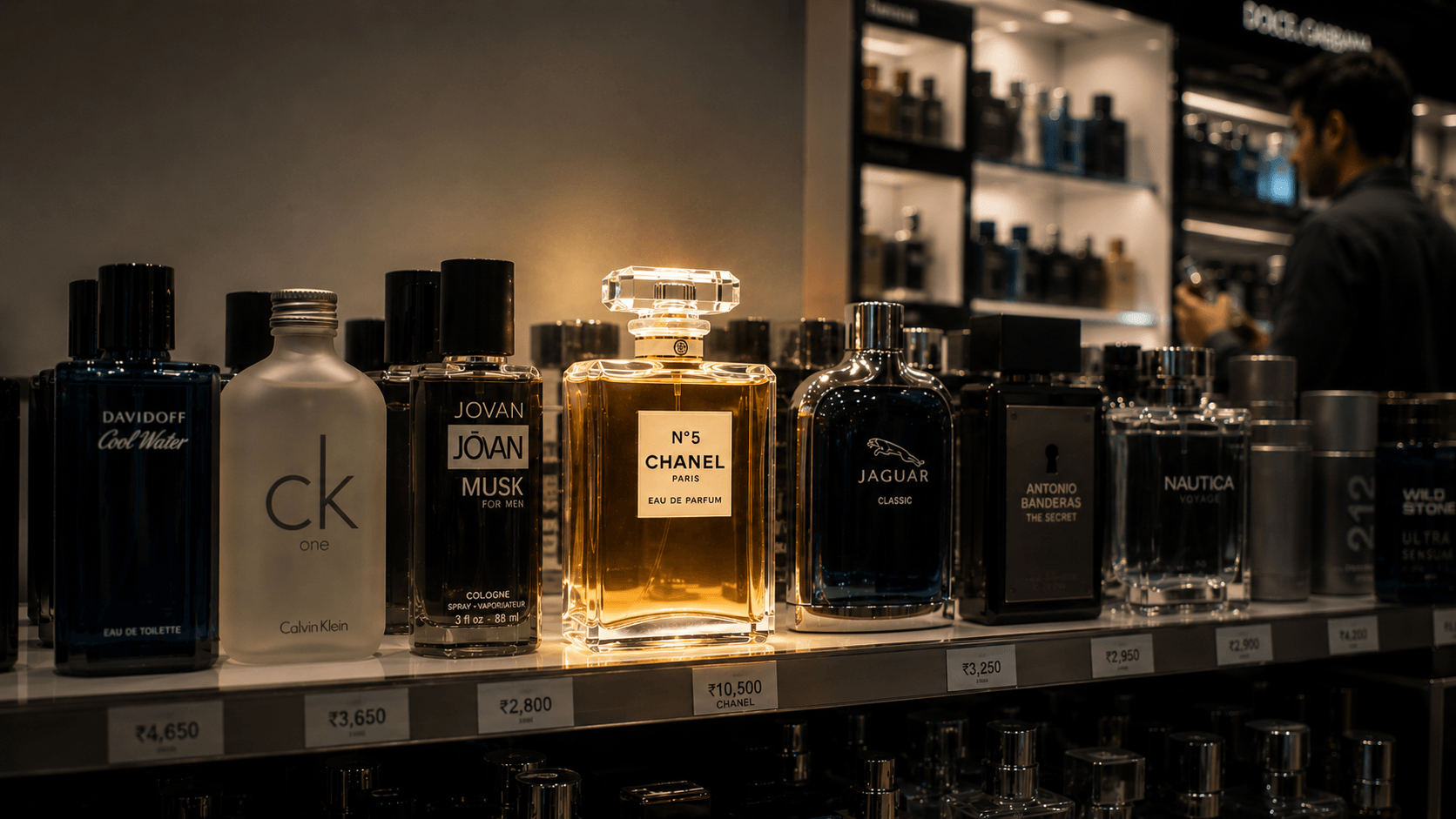




A brand can charge ₹500 for a product that another brand sells for ₹200.
But the interesting question isn’t:
“Why is this brand so expensive?”
The better question is:
“Why are customers willing to pay more?”
Because a premium brand isn’t simply a brand with a higher price.
If all you do is increase the price, you haven’t created a premium brand.
You’ve created an expensive product.
There is a difference.
A premium brand makes customers feel that the additional money is justified.
The customer isn’t thinking:
“I’m paying more.”
They’re thinking:
“I’m getting more.”
That “more” could be better quality.
Better performance.
Better design.
Better service.
Greater convenience.
Greater confidence.
Or simply a better overall experience.
That’s what makes a brand premium.
Premium Does Not Mean Expensive
This is the first distinction to understand.
Price is a number. Premium is a perception of value.
A product can be expensive without being premium.
And a product can be relatively affordable while still feeling premium.
Think about a restaurant.
One restaurant may charge ₹2,000 for a meal but deliver poor food, inconsistent service and an uncomfortable experience.
Another may charge ₹1,200 and consistently deliver excellent food, thoughtful service and a carefully designed experience.
Which one feels more premium?
Probably the second.
Because premium isn’t determined by the amount printed on the bill.
It is determined by whether customers believe the experience justifies the price.
Premium is not what a brand charges. Premium is what customers believe the brand is worth.
Why Are People Willing to Pay More?
Every purchase contains a small calculation.
The customer may never consciously write it down, but the question is there:
“Is this worth it?”
If the answer is yes, the customer buys.
If the answer is no, the price feels too high.
That’s why premium pricing works only when customers perceive enough value to justify it.
A ₹1,000 product isn’t automatically expensive.
It becomes expensive when the customer believes it is worth only ₹500.
And a ₹5,000 product isn’t automatically unreasonable.
If the customer believes the value is ₹7,000, the price can actually feel attractive.
This gives us a simple relationship:
Perceived Value > Price = Worth It
Perceived Value < Price = Too Expensive
The premium brand’s job is therefore not simply to charge more.
Its job is to create enough perceived value that paying more feels reasonable.
The Three Layers of Premium Value
Premium value usually doesn’t come from one thing.
It comes from several layers working together.
A useful way to understand this is through the Premium Trifecta:
Functional Value
Does it solve the customer’s problem?
Technical Value
Does it perform exceptionally well?
Emotional Value
How does it make the customer feel?
Put simply:
It works.
It performs.
It feels good.
The strongest premium brands combine all three.
1. Functional Value: It Solves the Problem
The first requirement is simple.
The product has to do what customers bought it to do.
A premium running shoe should help you run comfortably.
A premium hotel should give you a better stay.
A premium laptop should help you work effectively.
A premium skincare product should deliver the experience or result customers expect from it.
No amount of beautiful branding can permanently compensate for a product that doesn’t solve the customer’s problem.
Premium begins with usefulness.
2. Technical Value: It Performs Better
Once the basic job is done, performance becomes important.
This could mean:
- Better materials
- Better engineering
- Better durability
- Better technology
- Better precision
- Better reliability
- Better craftsmanship
The difference may not always be immediately visible.
But customers can experience it.
A premium product often feels better because more thought has gone into how it performs.
That’s why premium brands obsess over details that customers may not consciously notice.
A hinge that feels smoother.
A fabric that feels better.
Packaging that protects the product properly.
Software that responds faster.
A product that lasts longer.
Each detail adds evidence that the higher price has a reason behind it.
3. Emotional Value: It Makes Customers Feel Something
This is where premium branding becomes more interesting.
Two products can perform almost identically and still command very different prices.
Why?
Because people don’t buy purely on function.
They also buy based on how a product makes them feel.
A premium product might make someone feel:
- Confident
- Sophisticated
- Comfortable
- Secure
- Successful
- Appreciated
- Proud
This emotional layer can become extremely powerful.
The customer isn’t only buying what the product does.
They’re buying what owning or experiencing it means to them.
Premium Is About the Whole Experience
A premium product cannot exist in isolation from the brand around it.
Imagine buying an expensive watch.
The watch itself may be beautifully designed.
But what happens when you interact with the brand?
Is the website confusing?
Is the packaging careless?
Is the salesperson indifferent?
Is customer support difficult to reach?
Does the delivery experience feel ordinary?
Suddenly, the premium perception starts to weaken.
That’s because customers don’t experience a brand through one product feature.
They experience a series of touchpoints.
Before the purchase.
During the purchase.
After the purchase.
Every touchpoint contributes to the overall perception.
Premium is not one feature. It is the consistency of the entire experience.
Details Matter More Than Most Brands Realise
Premium brands often pay attention to things that other brands treat as minor.
Consider a hotel.
The room matters.
But so does:
- The booking process
- The website
- The welcome
- The cleanliness
- The scent
- The lighting
- The staff interaction
- The check-out
- The follow-up
None of these things alone creates a premium brand.
Together, they create an impression.
And that impression becomes part of what the customer believes the brand is worth.
This is why premium branding is often less about adding spectacular features and more about removing unnecessary friction and improving hundreds of small details.
Premium vs Luxury: They Are Not the Same
People often use “premium” and “luxury” as though they’re interchangeable.
They’re not.
A premium brand usually focuses on giving customers more value.
A luxury brand often focuses on exclusivity, status and scarcity.
Think about the difference in the customer’s internal conversation.
Affordable
“I saved money.”
Premium
“That was worth it.”
Luxury
“This says something about me.”
Premium makes the customer feel that the product delivers superior value.
Luxury can make the customer feel that owning the product says something about their identity or status.
That’s why a premium brand can often serve a relatively large market.
Luxury usually has stronger reasons to limit accessibility.
Premium seeks to increase perceived value. Luxury often increases perceived exclusivity.
Why Premium Brands Can Charge More
A premium price works when customers can understand why it exists.
Suppose two pairs of shoes look similar.
One costs ₹2,000.
The other costs ₹6,000.
The customer naturally asks:
“Why should I pay ₹4,000 more?”
If the premium brand cannot answer that question through the product and experience, the price feels arbitrary.
But if customers see:
- Better materials
- Better construction
- Better comfort
- Better durability
- Better design
- Better service
- Better brand experience
the price begins to make sense.
This is important:
Premium pricing doesn’t create premium perception.
The relationship usually works in the opposite direction.
Premium value creates the justification for premium pricing.
Premium Pricing Is a Consequence, Not a Strategy
A common mistake is deciding:
“Let’s become a premium brand. We’ll increase our prices.”
That is backwards.
Increasing the price doesn’t automatically increase perceived value.
Sometimes it simply increases resistance.
A better approach is:
Create better value → Communicate that value → Deliver it consistently → Earn the right to charge more
That’s how premium positioning becomes credible.
If the customer doesn’t see the additional value, the higher price becomes a problem.
If the customer clearly sees the additional value, the higher price becomes part of the equation.
Consistency Is What Makes Premium Believable
Imagine a brand that produces one excellent product but delivers mediocre service.
Is it premium?
Probably not.
Now imagine a brand that has:
- Excellent products
- Excellent packaging
- Excellent service
- Excellent communication
- Excellent attention to detail
The premium perception becomes much stronger.
Why?
Because customers are seeing the same signal repeatedly.
Every interaction reinforces the same idea:
“This brand cares about quality.”
Consistency turns isolated moments of excellence into a reputation.
And reputation is one of the strongest foundations of premium positioning.
Premium Brands Protect Their Reputation
A premium brand has something valuable to lose.
Its reputation.
That’s why cutting corners can be especially dangerous.
Suppose a premium restaurant suddenly starts using lower-quality ingredients to save money.
The short-term financial benefit might look attractive.
But if customers notice the decline, the brand can lose something far more valuable than the cost of those ingredients.
Its perceived value.
The customer begins thinking:
“Maybe this isn’t worth the price anymore.”
Once that thought appears, the premium position becomes vulnerable.
This is why premium brands have to protect the standards that created their premium perception in the first place.
Premium Is Built Through Signals
Customers cannot immediately inspect everything about a brand.
They don’t know exactly how carefully a product was designed.
They may not know how much quality control happened behind the scenes.
They may not know how much effort went into sourcing materials.
So they look for signals.
These can include:
- Design
- Packaging
- Reviews
- Testimonials
- Reputation
- Product demonstrations
- Customer service
- Store environment
- Website experience
- Brand communication
These signals help customers estimate something they cannot directly observe:
“How much value am I likely to receive?”
This is why even seemingly small details matter.
A premium signal isn’t valuable because it looks expensive.
It is valuable because it strengthens the customer’s belief that the underlying experience will be better.
The Danger of Fake Premium
This is where many brands go wrong.
They copy the appearance of premium brands without creating the underlying value.
They use:
- Gold colours
- Fancy packaging
- Expensive-looking fonts
- Sophisticated words
- Celebrity endorsements
- High prices
But the product itself doesn’t justify the perception.
That’s not premium branding.
That’s decoration.
Eventually, customers discover the gap between appearance and reality.
And when that happens, trust suffers.
You can manufacture the appearance of premium faster than you can manufacture premium value.
But customers eventually notice the difference.
Premium Is Not About Adding Everything
Another common misconception is that premium means giving customers more of everything.
More features.
More options.
More colours.
More packaging.
More messages.
More complexity.
Not necessarily.
Sometimes premium means less, but better.
A premium product may have fewer features but execute the important ones exceptionally well.
A premium restaurant may have a smaller menu.
A premium hotel may offer a calmer environment rather than endless entertainment.
A premium website may remove clutter instead of adding more information.
Premium often comes from knowing what not to include.
Scarcity Can Increase Premium Perception
When something is difficult to get, people may perceive it as more valuable.
Limited availability can create that effect.
But scarcity is not a substitute for value.
If a mediocre product is available only once a month, it doesn’t magically become premium.
Artificial scarcity may create curiosity.
But lasting premium perception still depends on the underlying experience.
The product has to deserve the anticipation.
How Small Businesses Can Build a Premium Brand
You don’t need a massive budget to build premium positioning.
A small business can create a premium perception through things that cost relatively little but require discipline.
For example:
- Clear communication
- Thoughtful packaging
- Consistent visual identity
- Reliable delivery
- Fast responses
- Clean presentation
- Professional invoices
- Easy-to-understand pricing
- Attention to customer experience
- Strong product quality
Consider a small bakery.
It doesn’t need a celebrity chef or a luxury storefront.
It can create a premium experience through:
- Excellent ingredients
- Consistent products
- Beautiful presentation
- Clean packaging
- Friendly service
- Reliable timings
- Thoughtful details
The same principle applies to a consultant, photographer, designer, salon, restaurant or local retailer.
Premium isn’t necessarily about spending more. It’s about caring more about the details customers experience.
How to Make Your Brand Feel More Premium
Start with the basics.
1. Define what you want to be known for
Premium brands rarely try to be everything to everyone.
Decide what specific value you want customers to associate with you.
2. Improve the product before improving the advertising
If the experience isn’t premium, don’t try to hide it behind premium marketing.
Fix the product.
3. Remove unnecessary friction
Make buying easier.
Make information clearer.
Make support faster.
Make the experience smoother.
4. Improve the details customers actually notice
Look at every touchpoint.
Website.
Packaging.
Communication.
Delivery.
Support.
Follow-up.
5. Make your visual identity match your positioning
Design doesn’t create premium value by itself.
But poor design can communicate the wrong level of value.
6. Charge a price that reflects the value you deliver
Don’t randomly increase prices.
Make the value visible first.
Then price accordingly.
7. Stay consistent
One premium experience isn’t enough.
Customers need to experience the same standard repeatedly.
The Premium Brand Test
Here’s a simple test.
Remove your logo.
Remove your brand name.
Remove your advertising.
Then ask:
“Would customers still recognise the value?”
If the answer is no, you may have a marketing problem rather than a premium brand.
A truly premium brand doesn’t depend entirely on its logo or advertising.
The product, service and experience carry the positioning.
That’s the real test.
The Bottom Line
A premium brand isn’t simply a brand that charges more.
It is a brand that gives customers a strong enough reason to believe that paying more is worth it.
That reason can come from better performance.
Better quality.
Better design.
Better service.
Greater convenience.
Greater confidence.
Or a more meaningful emotional experience.
The strongest premium brands combine these elements consistently.
They don’t simply announce that they’re premium.
They create enough evidence for customers to reach that conclusion themselves.
That’s the real secret.
Premium isn’t something a brand declares. It’s something customers conclude.
And when customers reach that conclusion consistently, price stops being just a number.
It becomes part of the value equation.
Because ultimately, customers don’t ask:
“Is this expensive?”
They ask:
“Is this worth it?”
And the brands that can convincingly answer “yes” are the ones that earn the right to charge a premium.
Leave a Reply