
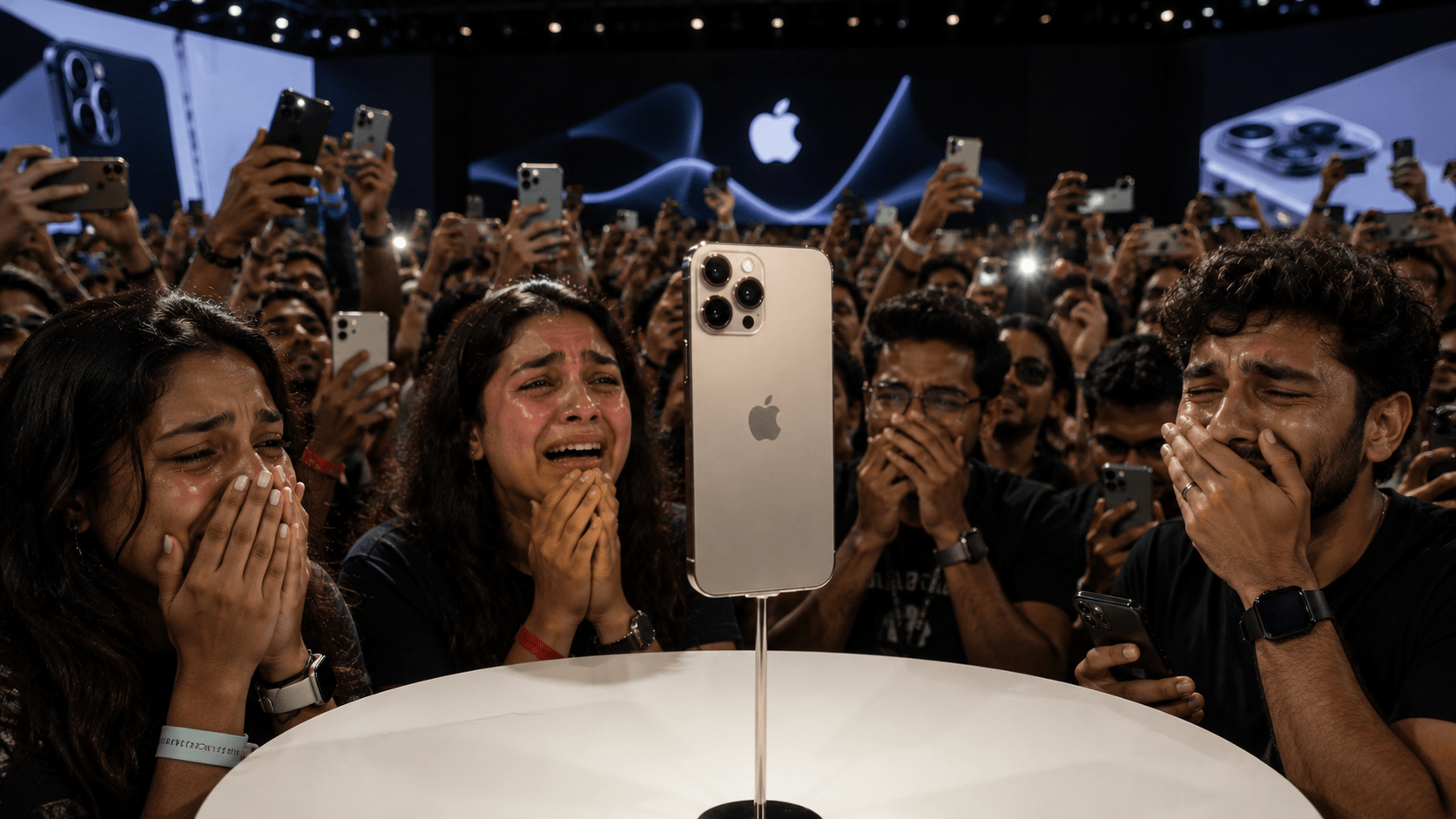




A new phone is announced.
The screen is brighter.
The camera is better.
The processor is faster.
The battery lasts longer.
And yet, every year, millions of people wait for the launch as if something much bigger is about to happen.
Some watch the keynote live.
Some discuss every leaked detail.
Some queue outside stores.
Some defend the brand passionately online.
And some people genuinely become emotional.
Which raises a strange question:
Why would anyone cry over a phone?
After all, it’s still a phone.
It makes calls.
It sends messages.
It takes photographs.
It runs apps.
Other companies make phones that can do many of the same things.
So what exactly are people reacting to?
The answer isn’t hidden inside the phone.
It’s hidden inside the meaning people have attached to the brand.
And that is the power of emotional branding.
People Don’t Just Buy Products
If people bought products purely for what they did, branding would be relatively simple.
A toothpaste brand would only need to prove that it cleans teeth better.
A car brand would only need to prove that its car moves faster.
A coffee brand would only need to prove that its coffee tastes better.
A smartphone brand would only need to prove that its specifications are superior.
But that’s not how people actually make decisions.
Two products can perform almost identically and still create completely different reactions.
Why?
Because people don’t experience products only through their functions.
They experience them through feelings, memories, associations and meaning.
Think about a childhood chocolate.
You may not remember its ingredients.
You may not remember its nutritional information.
But you may remember the feeling of eating it after school.
The smell of the wrapper.
The excitement of opening it.
The person who used to buy it for you.
The product became connected to a memory.
And once that happens, you’re no longer buying only chocolate.
You’re buying a small piece of your past.
Functional value tells people what a product does. Emotional value tells them why it matters.
What Is Emotional Branding?
Emotional branding is the process of creating a meaningful emotional connection between a brand and its customers.
The goal isn’t simply to make customers feel happy.
It is to make the brand mean something to them.
That meaning can come from:
- Trust
- Belonging
- Nostalgia
- Pride
- Freedom
- Achievement
- Excitement
- Security
- Love
- Aspiration
- Self-expression
Different brands trigger different emotions.
A children’s brand may create joy and wonder.
A healthcare brand may create reassurance.
A sports brand may create determination.
A luxury brand may create pride or aspiration.
A family-oriented brand may create warmth and nostalgia.
The emotion depends on what the brand wants to represent.
But the underlying principle is the same:
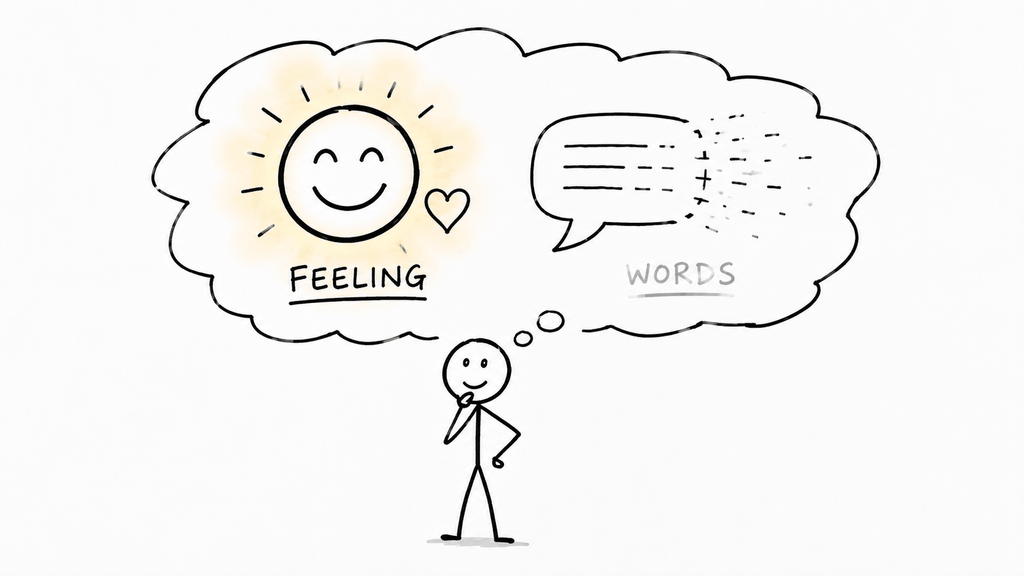
People remember how something made them feel far more easily than they remember what it said.
The Brain Doesn’t Store Brands as Feature Lists
Imagine someone asking you:
“Why do you like your favourite brand?”
You probably won’t respond with a spreadsheet.
You won’t say:
“Because its customer retention rate is 84%, its product has 17 features, and its packaging uses a particular shade of blue.”
You’ll probably say something much simpler.
“I trust them.”
“It feels premium.”
“I’ve grown up with it.”
“It just feels like me.”
“I love what the brand stands for.”
Those answers reveal something important.
A brand isn’t stored in the customer’s mind as a collection of specifications.
It is stored as a network of associations.
Every advertisement.
Every product experience.
Every interaction.
Every story.
Every visual.
Every memory.
Every recommendation.
adds another association.
Over time, those associations become the brand in the customer’s mind.
Emotional Branding Starts With an Emotion
Before a brand can build an emotional connection, it needs to understand a simple question:
What should people feel when they think about us?
This sounds obvious.
But many brands never answer it.
They jump straight to:
- Logo
- Colours
- Tagline
- Packaging
- Social media
- Advertising
Those things matter.
But they are tools.
The deeper question is:
What emotional territory should this brand own?
Nike might want you to associate the brand with determination and possibility.
Disney can evoke wonder and childhood imagination.
A safety-focused brand may want reassurance and trust.
A luxury brand may want aspiration and achievement.
A friendship-oriented product may want warmth and connection.
Once the desired emotional territory is clear, everything else becomes easier to design.
People Buy With Logic. They Choose With Emotion.
This doesn’t mean people are irrational.
It means emotion and logic work together.
A customer may logically evaluate:
Price.
Features.
Quality.
Performance.
But emotion can influence which option they actually prefer.
Imagine two restaurants offering similar food at similar prices.
One feels ordinary.
The other reminds you of a place you loved as a child.
Which one are you more likely to choose?
The food may be equally good.
But one has emotional meaning.
That meaning can become a competitive advantage.
Logic can justify a purchase. Emotion can make the purchase feel right.
The Four Pillars of Emotional Branding
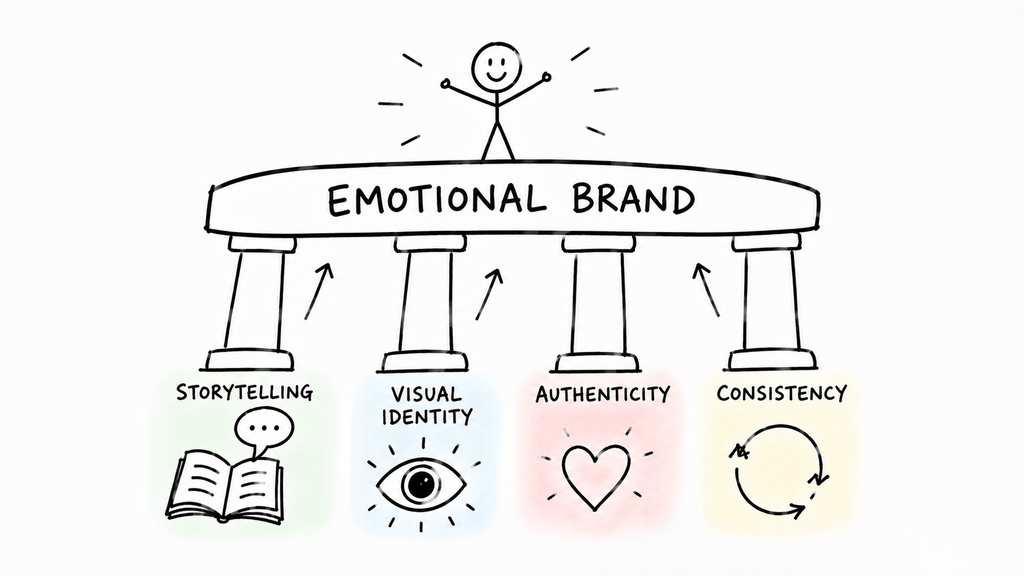
Strong emotional brands usually build their connection through several elements working together.
Four are especially important:
Storytelling.
Visual identity.
Authenticity.
Consistency.
None of these works independently.
Together, they create a recognizable emotional world around the brand.
1. Storytelling
Humans naturally remember stories.
A product specification tells you what something is.
A story tells you why it exists.
That’s why successful brands rarely communicate only features.
They tell stories about:
- Where they came from
- What they believe
- Who they help
- What they are fighting for
- What customers can become
Consider Nike.
“These shoes are lightweight” is information.
“Push beyond what you thought was possible” is an emotional invitation.
The product remains important.
But the story gives the product meaning.
2. Visual Identity
Before customers read a single word, they see something.
A logo.
A colour.
A package.
A storefront.
A website.
An advertisement.
These visual elements become shortcuts to emotional associations.
A familiar visual can trigger recognition almost instantly.
That’s why consistency matters.
If your brand looks completely different every month, you’re constantly rebuilding recognition.
A strong visual identity allows the customer to think:
“I know this brand.”
before they even process the words.
3. Authenticity
Emotional branding collapses when customers feel manipulated.
A brand cannot simply claim:
“We care about you.”
while treating customers poorly.
It cannot advertise sustainability while behaving irresponsibly.
It cannot talk about community while ignoring its customers.
Emotion becomes powerful when the customer believes it is genuine.
People don’t form deep emotional connections with promises. They form them with experiences that prove the promises are true.
4. Consistency
One emotional advertisement isn’t enough.
One great customer-service interaction isn’t enough.
One memorable campaign isn’t enough.
Brands become emotionally meaningful through repetition.
The same values.
The same tone.
The same experience.
The same promise.
Again and again.
Consistency turns individual experiences into expectations.
And expectations eventually become trust.
Why Memories Make Brands Powerful
Think about your favourite childhood brand.
You may not have chosen it yourself.
Your parents may have bought it.
Yet years later, seeing the packaging can trigger an immediate feeling.
That’s nostalgia.
The product may not be objectively better than today’s alternatives.
But it owns a piece of your memory.
This is incredibly powerful because memories are not simply facts.
They’re emotional experiences.
That’s why brands that become part of people’s childhoods can remain relevant for decades.
They aren’t competing only for today’s purchase.
They’re becoming part of tomorrow’s memories.
Emotional Branding and Identity
Some of the strongest brands become part of how customers describe themselves.
A person might say:
“I’m an Apple person.”
“I’m a Nike person.”
“I’m a Harley rider.”
“I’m a Lego fan.”
Notice what happened.
The customer stopped describing a purchase.
They started describing themselves.
That’s a major shift.
The brand has moved from:
Something I buy
to:
Something that represents me.
When that happens, switching becomes psychologically harder.
A competitor isn’t merely asking the customer to change products.
They’re asking them to change an expression of identity.
The Power of Belonging
Humans want to belong.
We naturally look for groups that reflect our interests, values and identity.
Brands can create these communities.
Sports brands create tribes around teams and athletes.
Gaming brands create communities around shared interests.
Technology brands create communities around products and culture.
Fashion brands create communities around aesthetics.
The product becomes a common language.
Customers recognise each other through it.
And the relationship becomes stronger.
A brand becomes more powerful when customers feel they belong to something bigger than the transaction.
From Customer to Advocate
Emotional connection changes customer behaviour.
A functional customer may buy.
An emotionally connected customer may:
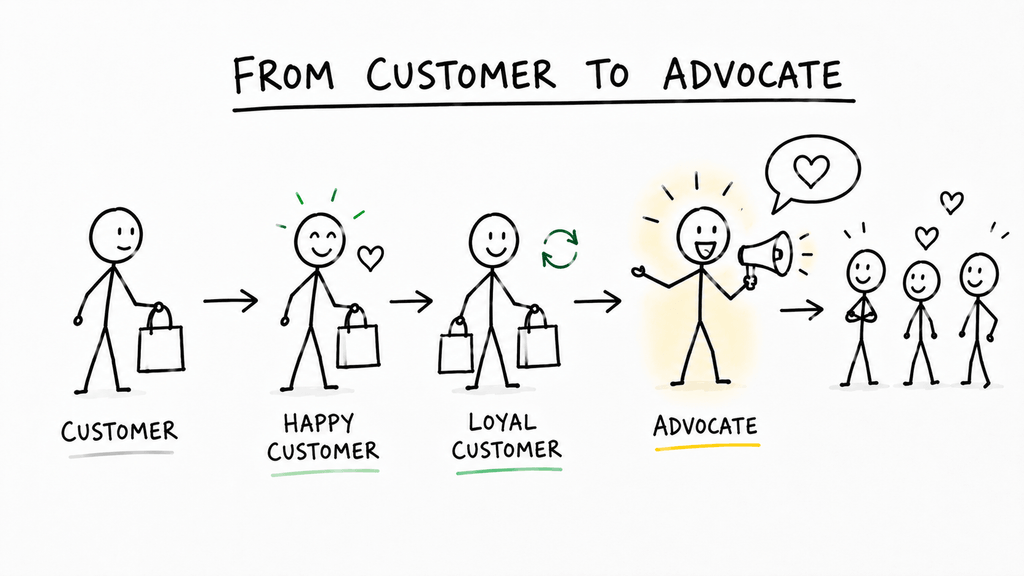
- Buy again
- Recommend the brand
- Defend it
- Talk about it
- Follow its launches
- Create content
- Join its community
That’s a completely different level of engagement.
The customer isn’t simply receiving marketing anymore.
They are participating in it.
This is one reason emotional branding can produce powerful word of mouth.
People don’t naturally tell their friends:
“I purchased a product.”
They tell them:
“You have to try this.”
Or:
“I love this brand.”
The second statement carries emotion.
Why Apple Is More Than a Phone Company
Now we can return to the question we started with.
Why do people become emotional during Apple launches?
Because they aren’t necessarily reacting to the phone alone.
Apple has spent decades building associations around:
- Design
- Creativity
- Simplicity
- Innovation
- Individuality
- Aspiration
- Technology
- Belonging
The launch therefore becomes more than a product announcement.
For an emotionally connected customer, it can feel like an event connected to a brand they already identify with.
The new product becomes a symbol of something larger.
And that’s why a specification change can trigger an emotional reaction.
The customer isn’t experiencing only:
“Here’s a new phone.”
They’re experiencing:
“Here’s the next chapter of something I care about.”
That’s emotional branding.
Nike Doesn’t Just Sell Shoes
Nike could spend all day talking about rubber compounds, cushioning and materials.
Those things matter.
But Nike’s emotional territory goes far beyond footwear.
Its communication has historically focused on:
- Determination
- Achievement
- Courage
- Potential
- Self-belief
The customer isn’t simply being asked to buy shoes.
They’re being invited into a mindset.
That’s a much larger proposition.
A shoe sits on your foot.
A belief can change how you see yourself.
Coca-Cola Doesn’t Just Sell a Drink
A soft drink is a functional product.
But Coca-Cola has spent decades associating itself with ideas such as:
- Happiness
- Togetherness
- Celebration
- Friendship
- Shared moments
The result is that people don’t always remember the advertisement.
They remember the feeling.
A family gathering.
A celebration.
A meal with friends.
A particular song.
A particular summer.
The product becomes part of the memory.
And the memory becomes part of the brand.
Disney Sells More Than Entertainment
Disney is another powerful example.
Its products include films, parks, characters, merchandise and experiences.
But the deeper emotional territory is much larger:
Wonder.
Imagination.
Childhood.
Family.
Magic.
That is why visiting a Disney park can feel meaningful even to adults.
They’re not simply buying access to rides.
They’re buying an experience connected to a world they’ve known for years.
The brand has accumulated emotional associations across generations.
Emotional Branding Isn’t Only for Giant Companies
You don’t need Apple’s budget to create emotional meaning.
A local bakery can become part of someone’s childhood.
A neighbourhood café can become someone’s daily ritual.
A family restaurant can become associated with celebrations.
A small clothing brand can represent a particular lifestyle.
A consultant can become known for making clients feel confident.
A salon can become a place where customers feel understood.
The scale doesn’t determine the emotional connection.
Meaning does.
In fact, small businesses sometimes have an advantage.
They can know customers personally.
They can remember preferences.
They can create individual experiences.
They can become part of local stories.
How to Build Emotional Branding
You don’t have to manufacture an elaborate emotional campaign.
Start with the fundamentals.
1. Know Your Customer’s Emotional Need
What does your customer actually want to feel?
Confident?
Safe?
Free?
Proud?
Connected?
Inspired?
Understood?
2. Decide What Your Brand Should Represent
Don’t try to own every emotion.
Choose a meaningful territory.
3. Build a Story Around It
Explain why the brand exists.
Give customers something they can believe in.
4. Create Distinctive Visual Signals
Make the emotional territory recognisable.
5. Deliver the Feeling Through Experience
If you promise care, show care.
If you promise simplicity, make things simple.
If you promise excitement, create exciting experiences.
6. Give Customers Something to Participate In
Communities strengthen emotional relationships.
Encourage conversation, sharing and participation.
7. Stay Consistent
Emotional associations grow through repetition.
Don’t change your personality every time you launch a campaign.
The Biggest Mistake: Trying to Manufacture Emotion
A brand cannot simply tell customers:
“Feel connected to us.”
That’s not how emotion works.
Emotion emerges from experiences.
If your brand wants to be trusted, it needs to behave in trustworthy ways.
If it wants to feel premium, the experience needs to support that perception.
If it wants to create belonging, customers need somewhere to belong.
If it wants to create nostalgia, it needs to become part of meaningful memories.
The advertisement can start the relationship.
The experience decides whether it survives.
Emotional Branding vs Functional Branding
Functional branding focuses heavily on:
- Features
- Price
- Performance
- Quality
- Convenience
- Specifications
Emotional branding focuses more heavily on:
- Feelings
- Identity
- Belonging
- Memories
- Values
- Aspirations
- Experiences
But this isn’t an either-or choice.
The strongest brands often combine both.
A product needs to work.
Then the brand gives people a reason to care.
Function gets you into consideration. Emotion can move you into preference.
Why Emotional Brands Are Harder to Copy
Competitors can copy features.
They can copy prices.
They can copy colours.
They can copy product categories.
But copying emotional meaning is much harder.
You cannot instantly recreate twenty years of memories.
You cannot manufacture genuine customer stories overnight.
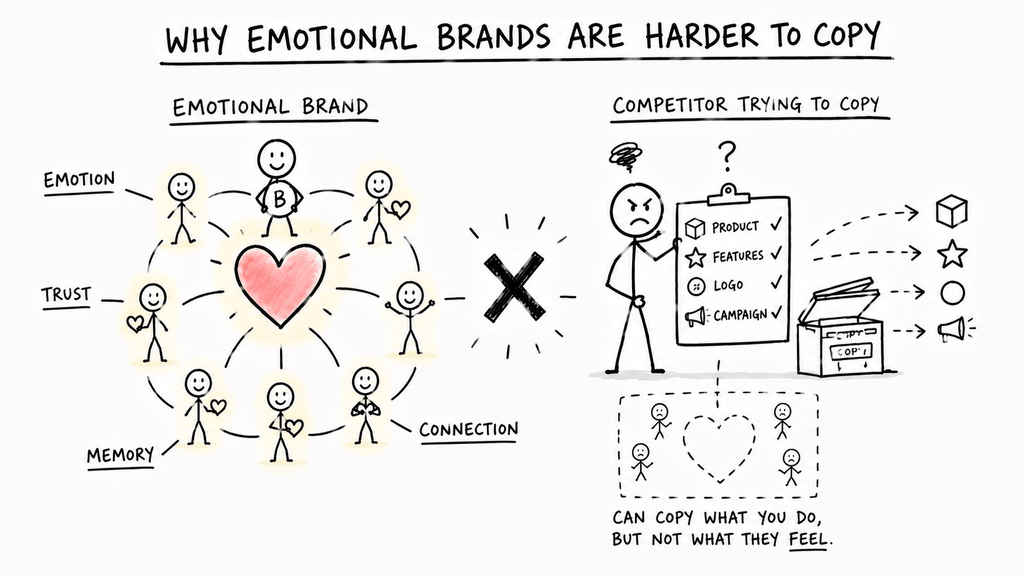
You cannot copy a community’s shared history.
You cannot duplicate the trust built through thousands of consistent experiences.
That’s why emotional branding can become a powerful long-term competitive advantage.
The Emotional Branding Test
Here’s a simple test for your brand.
Remove your logo.
Remove your tagline.
Remove your advertising.
Then ask:
“What do customers feel when they think about us?”
If the answer is:
“Nothing in particular.”
you may have a recognition problem.
If the answer is:
“They know we’re reliable.”
you have an emotional association worth building.
If the answer is:
“This brand feels like me.”
you may have something much stronger.
Because the ultimate goal isn’t for customers to remember your advertising.
It’s for them to remember how your brand fits into their lives.
The Real Power of Emotional Branding
Now we can answer the question we started with.
Why do people cry when Apple launches a phone?
Not because a new camera sensor is inherently emotional.
Not because a faster processor can make someone sentimental.
Not because a rectangle of glass deserves tears.
They react because the product has become connected to something larger.
A brand.
A memory.
A community.
A personal identity.
An aspiration.
A feeling.
That’s the real power of emotional branding.
The strongest brands don’t simply ask:
“What can we sell?”
They ask:
“What can we make people feel, remember, and believe about themselves?”
Because products can be replaced.
Features become outdated.
Competitors catch up.
Prices change.
But when a brand becomes attached to someone’s identity or memories, it becomes much harder to replace.
A customer may forget the specifications of a phone.
They may forget the details of an advertisement.
But they will remember how a brand made them feel.
And that’s the point.
People don’t fall in love with products. They fall in love with what those products come to mean in their lives.
Leave a Reply